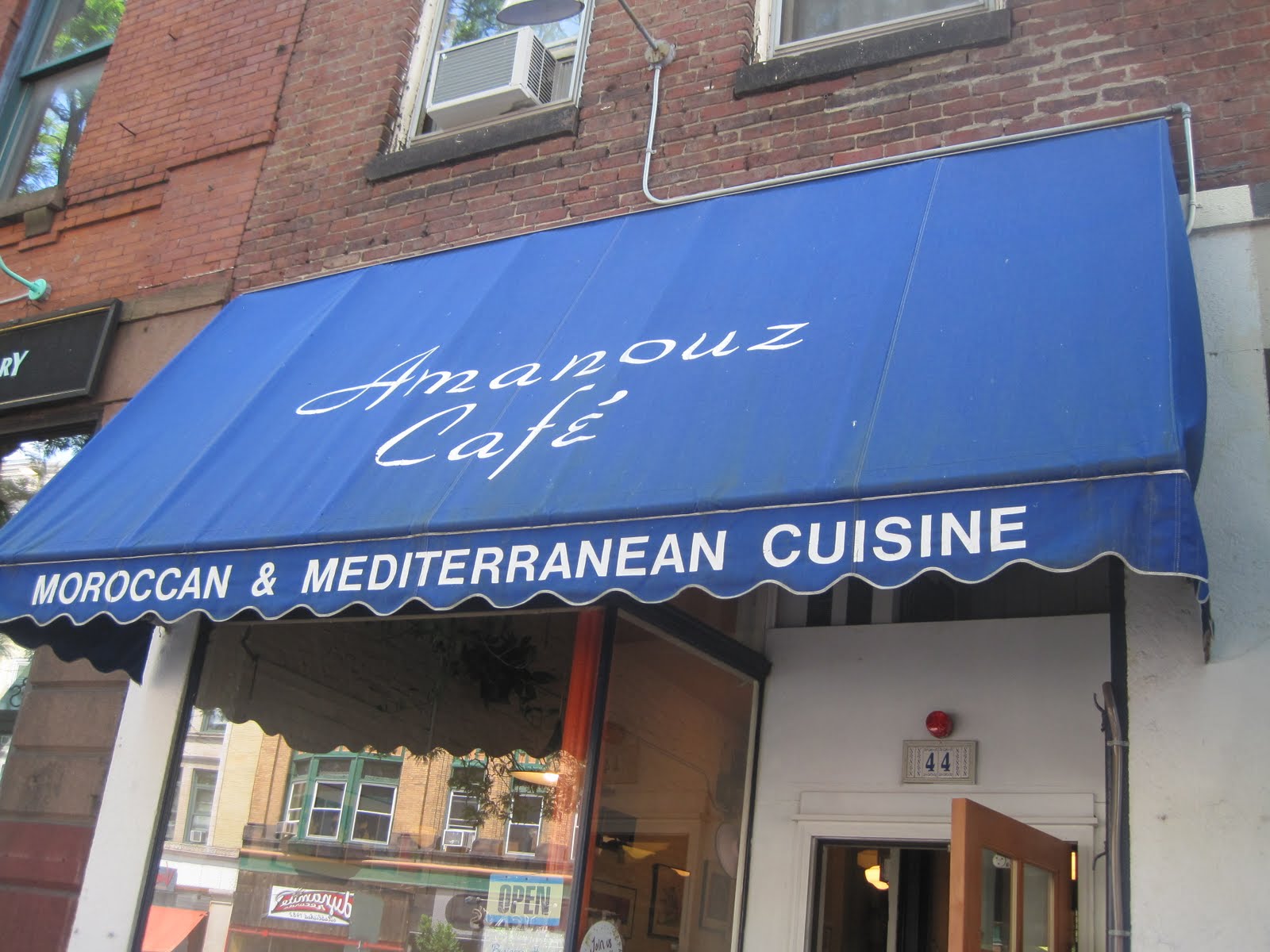
This summer I had a chance to eat brunch with my sister at Amanouz Cafe, a Mediterranean- North African restaurant in North Hampton, MA. It was a great paleo brunch without any sense of loss and even with new things to try. The spicy lamb sausage links served with a little onion, tomato salad were unbelievably tasty. The eggs were spectacular. One plate of eggs had a buttery herb sauce over the eggs and the other plate of eggs had a spiced tomato sauce. The most noteworthy thing about the eggs was that although they appeared scrambled (my favorite) they were actually steamed. Most of us only think of poached eggs when we think of steaming eggs. Those of us who enjoy our eggs scrambled up and cooked in a skillet, are unfortunately ruining the eggs in the process. Scrambling the yolk and then subjecting it to the temperature of a hot skillet oxidizes the cholesterol in the eggs and damages the Omega-3 fats in the yolk as well. This is an issue many eaters of eggs are willing to accept, especially those of us who do not like egg whites separately no matter how they are cooked! However, scrambling the eggs and then gently steaming them prevents you from wrecking the delicate, beneficial fats in your egg yolks. You need to have an egg poacher or heat proof cups (ramekins) to put the eggs in and then the cups sit in a shallow water bath that is gently simmering. The pan containing the water bath is covered with a tight fitting lid so the eggs are cooked via indirect steam heat. First, scramble your eggs with some liquid. You can use water. A ratio of 1.5:1 will make silky smooth eggs. If you want them drier and firmer use less liquid. You can use broth too. They are moist and fluffy and delicious. And will essentially be "molded" (think jello mold) when they are done so they look extremely chic on the plate. Just in case you need to bust out that kind of impressive food skill. Caveman style...
Monday, November 1, 2010
North African Steamed eggs
This summer I had a chance to eat brunch with my sister at Amanouz Cafe, a Mediterranean- North African restaurant in North Hampton, MA. It was a great paleo brunch without any sense of loss and even with new things to try. The spicy lamb sausage links served with a little onion, tomato salad were unbelievably tasty. The eggs were spectacular. One plate of eggs had a buttery herb sauce over the eggs and the other plate of eggs had a spiced tomato sauce. The most noteworthy thing about the eggs was that although they appeared scrambled (my favorite) they were actually steamed. Most of us only think of poached eggs when we think of steaming eggs. Those of us who enjoy our eggs scrambled up and cooked in a skillet, are unfortunately ruining the eggs in the process. Scrambling the yolk and then subjecting it to the temperature of a hot skillet oxidizes the cholesterol in the eggs and damages the Omega-3 fats in the yolk as well. This is an issue many eaters of eggs are willing to accept, especially those of us who do not like egg whites separately no matter how they are cooked! However, scrambling the eggs and then gently steaming them prevents you from wrecking the delicate, beneficial fats in your egg yolks. You need to have an egg poacher or heat proof cups (ramekins) to put the eggs in and then the cups sit in a shallow water bath that is gently simmering. The pan containing the water bath is covered with a tight fitting lid so the eggs are cooked via indirect steam heat. First, scramble your eggs with some liquid. You can use water. A ratio of 1.5:1 will make silky smooth eggs. If you want them drier and firmer use less liquid. You can use broth too. They are moist and fluffy and delicious. And will essentially be "molded" (think jello mold) when they are done so they look extremely chic on the plate. Just in case you need to bust out that kind of impressive food skill. Caveman style...
Labels:
amanouz cafe,
crossfit,
in the paleo house,
lamb,
north african,
paleo,
recipe,
scrambled eggs,
steamed eggs,
Tucson
Tuesday, October 26, 2010
Definition of an adult

Within the Paleo community and the traditional food ways community there is an on-going "conversation" regarding dairy. Strict Paleo followers obviously do not include dairy. In general, I suggest to my clients that they avoid dairy with the exception of butter/clarified butter which is an incredibly valuable, rare source of the short chain saturates. I also am intimately familiar with the work of Dr. Weston A Price and his nutrition research as well as the experience of thousands of present day families and individuals who have introduced raw dairy into their diets with profound health benefits. Where does that leave us with regard to what to do with dairy? It leaves us in the usual position when it comes to our food. How do you respond to it? How do you feel, behave, perform, look? How is your health? How is your body composition? What happens to you when you leave dairy out of your diet completely for six weeks? Be ruthless in your assessment. Don't make excuses for yourself. For example, dairy is impactful enough on my 12 year old son's acne that even he has begun to turn down ice cream on occasion. He doesn't say to himself "Well I'm a pre pubescent adolescent boy, I'd have zits anyway."
One thing is absolutely certain about dairy. If you are going to eat it you must consume it in it's original, nutritious form. Raw, alive and complete. No pasteurization, no homogenization, no skimming, no heating or cooking. You can culture it (raw cheese, raw sour cream and raw kefir). If you can't get your dairy in this form, DO NOT EAT IT.
Dr. Tom Cowan, M.D. is the author of The Fourfold Path to Healing, a brilliant look at many common illnesses with the adherence to Ancient Food Ways (although not Paleo ways) as one of the four healing paths. He likes to tell the following story: One day his son asked him, "Do you know the definition of an adult?" "What is it?" asked Dr. Cowan. "A person who likes vegetables" replied his son. Dr. Cowan uses this story to illustrate a vital point about nourishing a growing body-namely that human beings likely possess an intuitive sense about nutrition to which most of us have lost our connection. In the case of vegetables as fodder for children the issue of the necessity for fat-soluble nutrients is raised. When we reach adult hood our metabolism becomes more proficient at turning plant nutrients into forms usable by humans. As children, or when we are older, or if we have a metabolic deficiency, we are not proficient at using plant nutrients for our requirements. Dr. Cowan encourages parents (or those of us who are older or who have illness) to derive excellent nutrition by running the vegetables through a cow first!! Raw cream, butter, organ meat, bone broths come out the other side. For all you muscle-adding athletes out there you should think of yourselves as growing children. A child's body is in the process of building proteins, collagens, connective tissue, hormones, bone and muscle just like yours. All the original strong men knew this too. They ate raw cream, raw whole milk and raw beef and eggs (WITH THE YOLK).
Labels:
Cowan,
Fourfold Path Healing,
in the paleo house,
kids,
raw dairy,
raw milk,
Tucson,
Weston Price
Friday, October 15, 2010
Red Palm Oil
Red palm oil has not had the rebirth that coconut oil has been fortunate enough to experience. It may be that the taste is more unfamiliar to westerners and a little stronger. Red palm oil is a nutrient dense fat. It is loaded with beta-carotene (hence the color) as well as coenzyme Q10 and other benefits. You can read the story of red palm oil here.
There is a legitimate concern amongst folks who take environmental stability and sustainability into account when they chose their food supply that the Paleo diet is not an earth-friendly diet. In its correct form, the Paleo diet should be the MOST sustainable diet. Including a variety of foods that are produced in marginal ecological zones where conventional agriculture is not possible should be a desire we all have as Paleo eaters. Red palm oil needs to be on our radar. You can read more about it here. I think that African cooking is not on our radar at all! It doesn't have the cache of Asian cooking or the popularity of other ethnic cuisines. We miss out on some very Paleo food concepts if we don't look at many of the food traditions of African nations. I purchase my red palm oil at our international grocery store in Tucson and it is very affordable. In the pictures is the brand I found, and the nutrition label.
A study from right here in our own home state, looked at the dietary intake of red palm oil and its effect on the nutrient intake of breastfed babies: "Dr. Canefield of the University of Arizona in the US discovered that mothers who nursed their babies provided their babies with more vitamin A and carotenes by pre- paring their food with red palm oil than the control group which took beta-carotene capsules."
For a recipe that includes red palm oil and is derived from several African traditions sign up for the mailing list at www.paleofoodlist.com!! This month's recipes coming soon...
Sunday, October 3, 2010
Family Food traditions - The Pea
Green peas aren't really Paleo. They are legumes. But in my personal nourishing food universe, I try my best to eat freshly shelled peas once a year. My uncle makes fun of me, "You have to pay extra to get the peas that you have to do the work of shelling! Why not just buy the frozen ones?" He is right about the price actually, but I still don't care, because he didn't mention taste and effect on the soul. These days, if I get to New England at the right time of year, I take some money to Crossroads Farm and get a big bag of peas in the pod. Peas in their pod are a powerful reminder of the fact that there are some foods that just cannot be available all year around. There are only a couple weeks where gardens produce peas in their pod. As a kid we ravished the pea vines in my grandparents' garden gobbling them up right there in the row. We had to take turns shelling the peas on the front porch with my mother, grandmother and aunts so that they could be blanched and frozen. It was one of those tasks that was sort of boring, yet reassuring and peaceful. It was kind of a test to see how big a pea could get before, upon popping it in your mouth, you realized it had turned bitter instead of sweet. Eating peas from their shell once a year is a reminder to me that growing food is special, seasonal food is special, local food is special and family food traditions can be special. This past summer I wanted my sons to experience what I felt. The picture is my oldest son, shelling peas with my grandmother at her kitchen table. Eating green peas once a year may not be strictly text book Paleo, but it encompasses so many important aspects of eating well that I'm not throwing that baby out with the bath water just yet!!
Labels:
crossroads farm,
family,
in the paleo house,
legumes,
paleo,
peas,
shell,
vermont
Wednesday, September 29, 2010
Paleo Hors d'œuvre
At our recent "In the Paleo House Event" we served up several different Paleo party foods. This one was a little skewer of marinated lamb, heirloom cherry tomatoes and cracked green olives. Traditionally, a Middle Eastern lamb with lemon and oregano would be served with a yogurt sauce. Ours was served with a tahini sauce. When I make a tahini sauce I don't like to use lemon juice. The flavor is too harsh. I put some sesame tahini in my Vita-Mix. If I use 1c tahini, I add about 1/4c water and 1/4c olive oil. Then I add the grated zest of about 2-3 lemons. That is a nice powerful lemon flavor without the sharp acid sourness of lemon juice. Tahini and olive oil take quite a lot of salt as well, so I would add about 1T of grey, sun-dried sea salt.
Labels:
in the paleo house,
lamb,
middle eastern,
paleo,
tahini
Thursday, September 23, 2010
Bored eating the same old thing?
It seems that lots of people find themselves stuck in a rut when they start eating Paleo. I think there are a bunch of reasons for this. The first one is that many people want any old excuse to go back to eating the same cereal/bagels/toast they were eating for the previous twenty years (although they never complained about having to eat the same thing every day then?!?!). Another reason is that many people think that breakfast is supposed to look a certain way. For example, when I tell people I eat stew for breakfast they think that is CRAZY because stew is for dinner not for breakfast. Why?? There is no good reason for that at all. In fact we should eat our most nourishing food earlier in the day. Another reason people feel stuck in a rut with their food is because we are so ADHD and overstimulated that we no longer notice and appreciate subtle differences in flavors and textures. Let's talk asparagus. During asparagus season I like to have it a few times per week, but it is different every time. Sometimes I grill it and then drizzle it with olive oil. Other times I make a little Hollaindaise sauce for it. Sometimes I steam it and serve it with garlic butter. Once in awhile I steam it with matchsticked carrots and make a little chili/miso sauce for it. The photo shows lightly steamed asparagus sprinkled with truffle salt. The truffle salt was a beautiful gift. It tastes nothing like regular salt, and asparagus with truffle salt tastes nothing like asparagus with olive oil and lime juice. Allow yourself the opportunity to see your food in all its wide range of beauty. Develop an appreciation for the more refined and subtle nuances of your food. My Dad had a stock answer for my sisters and me when we whined about being bored, "Only boring people get bored." Hmmm, I won't go so far as to accuse you of being boring if you are complaining about being bored with your food, but my father would.
Tuesday, September 14, 2010
BIRCH SYRUP
Hello again. The long hot Sonoran summers drain me of all zest for life and creativity. The end of this inferno is in sight and I'm ready to write here again! As I've mentioned before, my definition of "Paleo eating" always returns to the hunter-gatherers. During the Tucson summer my spirit creeps north where it hides in a mossy, shady spruce forest near a cold little splashy brook. In those parts of the world we have three hunted/gathered sweeteners: raw honey, maple syrup and birch syrup. Almost nobody has had a chance to taste birch syrup. You have to order it from Alaska or Canada. This is not as unreasonable as it sounds unless you have made a commitment to eating locally because I'm sure you eat many foods every day that come from that far away. It would be better to order birch syrup from Alaska than to eat unfinished honey imported from China (see this NPR story).
Birch syrup is more precious than maple syrup. It takes about 40 gallons of sap from a maple tree to make one gallon of syrup. It takes nearly 100 gallons of sap from birch trees to make 1 gallon of birch sap. It can be done sustainably and without harming the trees. Check out the management of the sugar bush that produces Kahiltna Gold birch syrup. They let the trees rest two years between tappings! Birch syrup is less sweet than maple syrup and tastes faintly of molasses. It has a similar nutrient profile to maple syrup including manganese, magnesium, iron and some B vitamins, but birch syrup has more than double the nutritional content. The one drawback, as far as I'm concerned, about birch syrup is that it is primarily fructose as opposed to maple syrup which is sucrose. Isn't it fascinating that trees have different types of sugars!
Birch syrup is delicious and pretty soon I'll give you a couple recipes. The basket in the picture is perhaps my favorite possession. It was made by a Penobscot man in Maine using the traditional brown ash. It is strong as an ox and beautiful. I grew up watching my grandfather use his Penobscot-made pack basket for all his hunting and fishing trips. No plastic, no fancy fishing bags. I feel honored to have this beautiful, utilitarian basket. Brown ash trees, birch trees and sugar maple trees are found in similar ecological zones.
Labels:
Alaska,
Arizona,
birch syrup,
fructose,
Maine,
maple syrup,
pack baskets,
paleo,
paleo sweeteners,
Penobscot
Subscribe to:
Posts (Atom)