The Low Down

The human body is a metabolic marvel comprised of dozens of little systems connecting to create one complex system. Food is the fuel, the input, for the systems. Our metabolic machinery evolved over hundreds of thousands of years to function optimally on select fuels. These fuels were the original, Primal foods of the human organism. Over these hundreds of thousands of years our Big Game Hunting, small prey capturing, scavenging, foraging, gathering, opportunistic ancestors accumulated experience and wisdom about nourishing themselves. The learned to preserve and predigest foods to maximize the quality of their metabolic fuel. Eventually they learned to cook foods without destroying the important nourishing properties of the food, and then they learned to heal the human body with food. Only recently in the human evolutionary experience, have we abandoned all these hundreds of thousands of years of accumulated epicurean genius. Now we fuel our marvelous, complex metabolic machinery with crap invented to create profits for agribusiness. We have become dumb eaters. As we regain our eating intelligence it doesn't make sense to move back to the savannah and put out our fires or climb into our cave and pretend there is a glacier next door. It makes sense to fuel our bodies with all the primal human foodstuffs, prepared and preserved with accumulated ancestral wisdom and served up for the undeniable desires of the human taste buds. Primal, paleolithic food choices, handled according to ancient food ways resulting in outrageously good food.
PRIMAL. SMART. DELECTABLE.
Showing posts with label crossfit. Show all posts

Tuesday, November 23, 2010

It's gravy


Gravy used to disgust me. I liked my turkey and potatoes dry as a kid. I'm not sure if this was a personal issue with stunted development or a commentary on the gravies I was served. Gravy is now the best part of any roasted meat meal, including the Thanksgiving behemoth, the turkey.

It is possible to get very sophisticated about terminology regarding gravy. "Gravy" is a thick, flour-based sauce. Potentially disgusting. A reduction sauce, or deglazed stock is thinner, more flavorful and all around more delicious, not to mention easily Paleo. Although we will serve this at our Thanksgiving table, and we will serve it out of a gravy boat, and we will call it gravy, it is not truly "gravy", it is a deglazed, reduction sauce. And it is better.

The first thing about making gravy is that if you are one of those super-stress freak type cooks who focuses more on the end result than on the process you need to get a hold of yourself. The gravy will be made after the turkey comes out of the oven when all the relatives and guests are peppering you with offers of "help" and/or asking when the food will be served. You will be tempted to rush and give in to this outside pressure. Don't do it. The final moments before a large meal with a roast of meat are sacred. Everyone but your true assistants steps aside. It is nice if the meat carver is a different person than the gravy maker. Do as my grandfather always wanted, and warm your gravy boat or dish on the back of the stove. Nothing takes a gravy downhill faster than pouring it into an ice cold dish.


If you begin the roasting process with that Holy Trinity of herbs (sage, rosemary and thyme) mixed in to softened butter, you will not have any worry regarding the flavor of your sauce. I slather this herb butter under the skin of my turkey as well as all over the top before it goes in the oven. Turkey skin is hardly attached to the meat, so this is easy. I use this melted butter as part of the pan drippings that I baste the turkey with during cooking. Once I remove the turkey form the roaster to the carving board I have a large pan full of delicous drippings. If the turkey was particularly succulent and there is a large amount of fat, I pour some of it off. I keep about 1 cup of fat in the roaster and all the other liquid and drippings. If you let your turkey get too dry during cooking you might need some additional stock or water. You can have additional stock on hand by simmering the "giblets", (the neck etc... that is in a little bag inside your turkey usually) in some water while the turkey is roasting. I like about 1 1/2c of liquid to 1c of fat, but to be honest, I usually just leave EVERYTHING in the roaster and get started. I take 1/2c of drippings out of the pan and put them in a pyrex measuring cup. I add 1/4c of arrowroot powder and I mix like mad until there are no lumps. Arrowroot is not as forgiving as flour about yielding up its lumps later on in the process. My grandmother's edition of The Joy of Cooking asserts that arrowroot will make the most delicate textured sauce! This gem of a book also reminds us that arrowroot has a neutral flavor and, unlike flour, does not need to be cooked to remove its "rawness". Arrowroot also has a calcium-base which makes it nice for the Paleo crew. Now, add your arrowroot mixture back into the roasting pan which you should have on a burner with the heat on medium. Whisk vigorously! At this point, your sauce is finished except for the addition of salt if you want it. I sometimes throw some onions, garlic, carrots, white wine etc... in around my roasting meat. You can use this as part of your sauce by removing all chunks of vegetables and blending them with stock before returning them to your roasting pan.

Saturday, November 20, 2010

Cranberry Sauce-truly hunted and gathered


Combining new and unusual flavors is one of the most rewarding expressions of culinary artistry. Our global food world has opened up a whole new array of tastes and ingredients to us in the kitchen. This is exciting and makes for some delicious recipes, but it also allows us to engage in some eating habits that are extremely suspect in terms of sustainability. The presence of international flavorings certainly takes us a long ways away from the flavor experiences of our hunter gatherer forebearers. We are approaching the Thanksgiving holiday. There is no shortage of writings on the meaning of Thanksgiving, food and the politics of settling the United States. Personally, I am grateful for a day of family, food, rest and feasting and I believe it is a wonderful day for many of us. However, I also spent many years learning about the history and politics of European settlers and the Native peoples they displaced. This blog is also not the place for an evaluation of that shocking chain of events. This blog is about food and hunter gatherer food traditions. We have robbed the native people's of the United States of many of their food traditions, either by hunting their food supply to extinction, forcing them off the land that sustained them, or by wreaking ecological havoc with water usage practices and invasive species. On this Thanksgiving Day, when we are supposed to be honoring the eastern native peoples, the Abenaki and their neighbors, for saving the helpless, starving pilgrims let's take a moment to be true to the food traditions of those people. Today, we begin with that deep red staple, the cranberry. Cranberry sauce is on many tables only once per year. For some of us it comes jellied in a can and for others we get more adventurous combining cranberries with cinnamon, cloves, oranges and sugar. I'd like you to think about how cranberries would have been used by the Abenaki (or maybe the pitiful pilgrims). Cranberries grow in a swamp where there are nice cold winters. They are primarily a crop of New England. Gathering cranberries is a spectacularly fun activity. There are no thorns like raspberries, you don't have to bend over like strawberries and there aren't zillions of flies and mosquitos like blueberries. In my experience you paddle down a lovely blue river on one of the final brilliantly sunny warm days of the season in your canoe. You paddle up to the bushes alongside the river and you reach out and pick the cranberries and toss them into your basket. If you are brave and adventurous you might climb out of the canoe and cautiously pick your way into the bushes hoping not to misplace a foot and end up waist deep in really cold water!
If we put our minds to the ingredients available to the Abenaki or other early New England settlers (who had used up all their ship stores) we quickly realize that cane sugar would not be available. Citrus fruit was certainly not around, nor were the spices of Asia and Africa. However, gelatin was available in great quantities as well as three wild sweeteners: birch syrup, maple syrup and honey. I made mine with birch syrup.
The Roots of Cranberry Sauce

1 bag organic cranberries, washed
3T powdered gelatin (this obviously is not the form the original Thanksgiving kitchen would have possessed)
1/4-1/2c birch syrup
Clean water

Cook cranberries in 1/4c water on low heat until they soften and burst (about 15min).
You can either press the cooked cranberries through a sieve (wait til they cool) or you can dump them in a blender. I used the blender because I want to eat all the skins and seeds. In my blender I added the birch syrup. Blend until smooth. In the pot you cooked the cranberries in add 1/4c water and heat so that you can dissolve your gelatin in it. Stir up your gelatin until it dissolves and then pour the blended cranberries and sweetener in with the dissolved gelatin. Stir well. Use any type of glass mold or dish that is smooth. If you are worried about removing the sauce from the mold you could line the mold with saran wrap, but let the sauce cool a little before you pour it in. Pour the sauce into the mold and refrigerate for several hours. The flavor of my sauce is deep, rich, and tart, but it is actually less sour than many of the overly sweet canned sauces I've tasted.

Honor the hunter gatherers that gave us this holiday.

Tuesday, November 16, 2010

Minerals for your bones, from bones


I believe one of the single biggest flaws in the average Paleo person is the absence of bone stock in the diet. It is absolutely true that paleolithic people did not use dairy and that dairy foods are not required for optimal calcium intake. However, non-dairy eating, paleo person had an extremely good, frequent source of not only calcium, but every other mineral that is required to create strong bone in our body. They got these bone building minerals straight from...other bones. One early cooking method used by several indigenous cultures involved placing chunks of meat and bone into a vessel containing water and heating the contents either over fire or by adding hot stones to the mix. Bones were cracked open and the marrow eaten out and they were sometimes ground and eaten powdered. Fish bones from small fish were always eaten whole (which is why sardines with the bones in are such a good source of calcium whereas boned sardines are not). Even our great grandmothers fed their families bone minerals. A few generations ago no self respecting head-of-the-kitchen would have thrown away a chicken carcass or beef knuckle bone. It would have gone into the stock pot. Modern day Paleo folk who sustain themselves on salmon fillet, boneless chicken breasts and ground beef are missing out. Have your kids do the following experiment just to make it fun. Try to bend a chicken thigh bone. Feel that it is hard. Soak the bone in vinegar for 24 hours. Now check it out. It is rubbery. All the hard minerals like calcium have been dissolved by the acid in the vinegar and are now in solution in your water. Here is how to do it as a delicious stock instead of as a science experiment.

1 chicken carcass precooked. My family likes roast chicken so I use the leftover gristly pieces and bones from our roast chicken. I take any leftover meat off before this process.

Fill a large stock pot with non-chlorinated water. Add 1/4c of vinegar (you won't taste it in the soup). Add the carcass (don't add the leftover gravy or gelatin). Add a couple bay leaves, a few celery stalks, a quartered onion and a few hunks of carrot. Leave this pot at room temperature for about 2 hours.

Bring it to a boil on the stove and then turn it way way down, until it is just barely simmering. Leave it simmering for about 1-2 hours.

Let the stock cool just a little. I set up a large colander over a huge pot or bowl and I dump the contents of the pot into the colander. All the beautiful stock drains into the bowl and I get rid of the rest.

Now you have a plain chicken stock that you can use right away or freeze for later. All winter long you should be consuming bone stock daily. Soup for breakfast is my favorite in cold weather.

EAT BONES FOR STRONG BONES

Monday, November 1, 2010

North African Steamed eggs


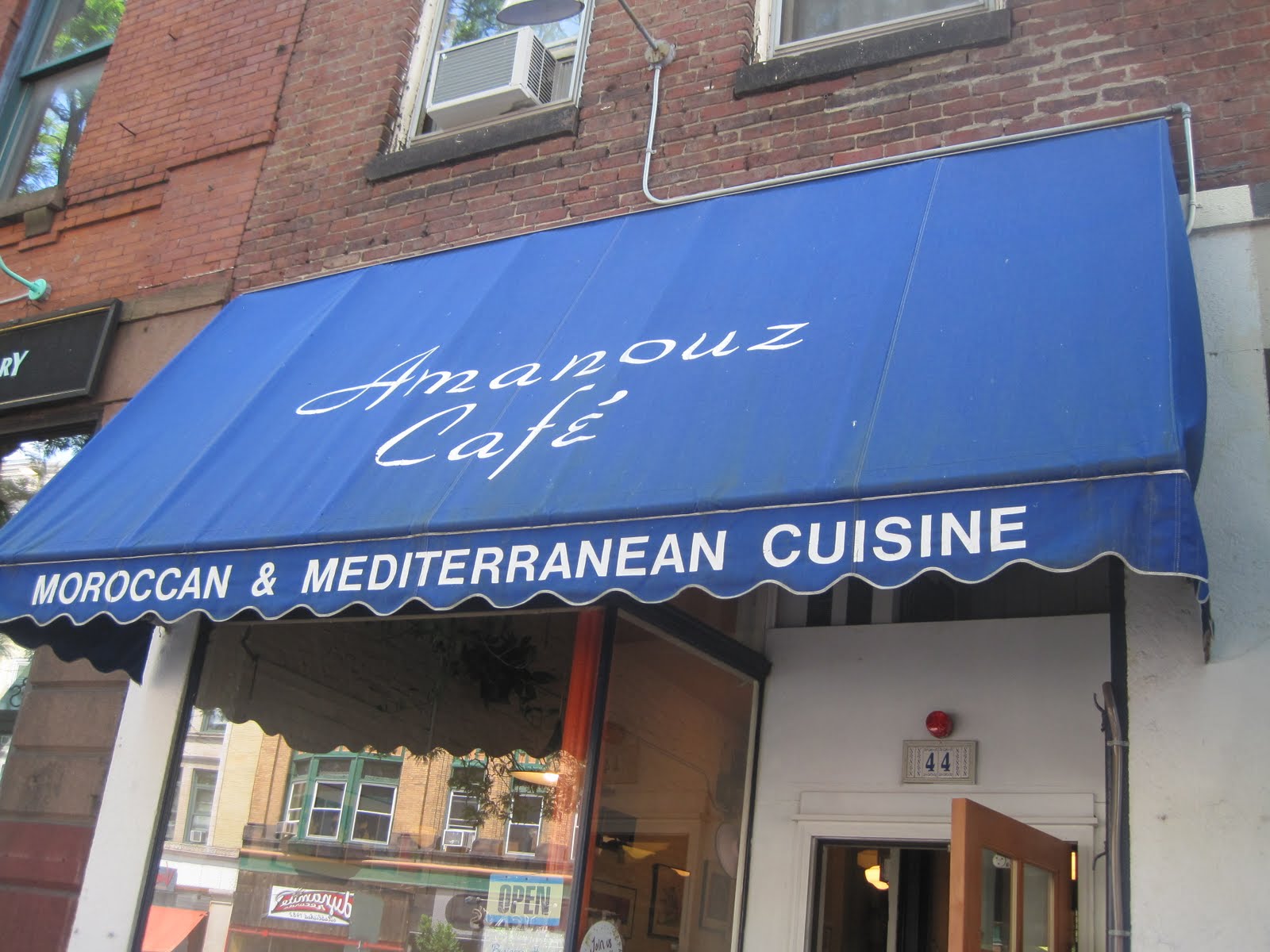
This summer I had a chance to eat brunch with my sister at Amanouz Cafe, a Mediterranean- North African restaurant in North Hampton, MA. It was a great paleo brunch without any sense of loss and even with new things to try. The spicy lamb sausage links served with a little onion, tomato salad were unbelievably tasty. The eggs were spectacular. One plate of eggs had a buttery herb sauce over the eggs and the other plate of eggs had a spiced tomato sauce. The most noteworthy thing about the eggs was that although they appeared scrambled (my favorite) they were actually steamed. Most of us only think of poached eggs when we think of steaming eggs. Those of us who enjoy our eggs scrambled up and cooked in a skillet, are unfortunately ruining the eggs in the process. Scrambling the yolk and then subjecting it to the temperature of a hot skillet oxidizes the cholesterol in the eggs and damages the Omega-3 fats in the yolk as well. This is an issue many eaters of eggs are willing to accept, especially those of us who do not like egg whites separately no matter how they are cooked! However, scrambling the eggs and then gently steaming them prevents you from wrecking the delicate, beneficial fats in your egg yolks. You need to have an egg poacher or heat proof cups (ramekins) to put the eggs in and then the cups sit in a shallow water bath that is gently simmering. The pan containing the water bath is covered with a tight fitting lid so the eggs are cooked via indirect steam heat. First, scramble your eggs with some liquid. You can use water. A ratio of 1.5:1 will make silky smooth eggs. If you want them drier and firmer use less liquid. You can use broth too. They are moist and fluffy and delicious. And will essentially be "molded" (think jello mold) when they are done so they look extremely chic on the plate. Just in case you need to bust out that kind of impressive food skill. Caveman style...

Friday, October 15, 2010

Red Palm Oil


Red palm oil has not had the rebirth that coconut oil has been fortunate enough to experience. It may be that the taste is more unfamiliar to westerners and a little stronger. Red palm oil is a nutrient dense fat. It is loaded with beta-carotene (hence the color) as well as coenzyme Q10 and other benefits. You can read the story of red palm oil here.

There is a legitimate concern amongst folks who take environmental stability and sustainability into account when they chose their food supply that the Paleo diet is not an earth-friendly diet. In its correct form, the Paleo diet should be the MOST sustainable diet. Including a variety of foods that are produced in marginal ecological zones where conventional agriculture is not possible should be a desire we all have as Paleo eaters. Red palm oil needs to be on our radar. You can read more about it here. I think that African cooking is not on our radar at all! It doesn't have the cache of Asian cooking or the popularity of other ethnic cuisines. We miss out on some very Paleo food concepts if we don't look at many of the food traditions of African nations. I purchase my red palm oil at our international grocery store in Tucson and it is very affordable. In the pictures is the brand I found, and the nutrition label.

A study from right here in our own home state, looked at the dietary intake of red palm oil and its effect on the nutrient intake of breastfed babies: "Dr. Canefield of the University of Arizona in the US discovered that mothers who nursed their babies provided their babies with more vitamin A and carotenes by pre- paring their food with red palm oil than the control group which took beta-carotene capsules."

For a recipe that includes red palm oil and is derived from several African traditions sign up for the mailing list at www.paleofoodlist.com!! This month's recipes coming soon...

Tuesday, May 4, 2010

Swiss Chard and Beet Greens


We have an abundant crop of swiss chard in my back yard and I bought a bunch of small beets at the Farmer's Market which came with greens, so I decided to add them to breakfast. I know A LOT of people who don't really like the dark leafy greens and I've been served dark leafy greens in many ways that make me appreciate why people wouldn't like them!! The first trick to make lovely greens is to not leave them whole with big thick stems. Gross. If the stem is very thick cut it out. You don't have to waste it. I then chop them up very small and add them back in. Slice the greens into ribbons, ACROSS the stems. Place the chopped stems into a frying pan with a little water and turn the heat on high. Once the stems soften a little then you can add the rest of the greens and just gently steam them in a very small amount of water that is mostly cooked away by the time the greens are refinished. This means you need to keep your eye on things so the pan doesn't dry out.
For the breakfast in the picture, I minced 4 cloves of garlic (I was cooking enough greens for 4 adults) and very gently sauteed them in about 5T of butter. I cooked the garlic just until it started to turn golden so it didn't have a burnt taste. When the greens were done I poured the garlic and melted butter into the pan with the greens and added a splash of balsamic vinegar.

Sunday, May 2, 2010

Cacao Butter


I'm always getting asked about Paleo desserts. Even more frequently than questions about Paleo desserts, are questions about Good Fats. One of the ways I approach desserts, especially in the land of kids, is to use them as a vehicle for good fat. There are the usual options, most frequently eggs, butter and coconut. There is one other MOST EXCELLENT option which has only recently become widely available in food grade form. Thanks to the Raw Food Movement, raw organic cacao butter can now be purchased in nearly all natural food stores. Sadly, I feel as though when I mention the Raw Foodists I must immediately distance myself at the same time. Vegan Raw Food activists are primarily a group of slightly to intensely flaky people pushing their own strange/hypocritical food morality, often with trust funds, who would benefit from a very good steak. They have some things really right about food, so I don't like to throw the baby out with the bathwater, but I can't stand their preaching about how people who eat animals are not as spiritually "high", and yet most of these Raw people have adopted several spiritual traditions (drumming, sacred circles, chanting etc...) that originated with the world's HUNTER-gatherers. Uggh. Still, I'm not beyond acknowledging and thanking the Raw Food Folks for making raw cacao butter an option for me.
Cacao beans grow on a tree. A tree called Theobroma cacao. This, of course, translates to Food of the Gods. Cacao trees are originally a South and Central American equatorial shade tree. Nearly 50% of the cacao bean is fat. This fat is cacao butter. It is about half saturated and half unsaturated fat. Cacao butter is rich and delicious and provides you with a lovely variety of fats. All you hard gainers out there, if you are tired of olive, coconut and eggs, get some cacao butter. It comes in soapy-feeling chunks which need to be gently melted over a pot of hot water (double boiler). After that you can mix in anything you like including minced dried fruit or nuts. Here is an example:

1c unsweetened shredded coconut
1c finely chopped goji berries
1/4 raw honey
3 drops orange oil
3/4c melted cacao butter

Mix well, it will be very crumbly. Press into a pan in a layer and refrigerate. Once it has cooled you'll be able to cut squares out of it.

Saturday, April 24, 2010

Paleo Greek - Episode #1: Grape Leaves


My sons performed some plays last night based on 4 Greek myths. Their fellow cast members were a bunch of other homeschoolers. Homeschoolers are notorious for leaving no stone unturned, so in honor of the Greek myths we had a Greek potluck. This seemed the perfect reason to unearth the jar of grape leaves from my shelf (that had been there awhile) and make stuffed grape leaves. My sister, realizing my often frantic, over-scheduled existence, was like "why the hell don't you just go buy some stuffed grape leaves"? "They won't be Paleo. They'll have rice" I said. "Yeah, like 14 grains of rice. So what." My sister is way more sensible than I am. But I had already envisioned an idyllic homeschool, mother-son experience -cooking Greek food to soak up the whole Greek thing before the debut. First, as I was gingerly tugging the wad of grape leaves out of the too-narrow-mouthed jar I told my sons the story of their Dad and I watching the very old Portugese women pick grape leaves from a vine alongside our triple decker apartment building in Somerville, MA. Like most children of divorced parents, my kids find stories involving their parents together, fairly compelling. Grape leaves aside. I gave Son #1 the task of carefully peeling apart the fragile leaves, unwrinkling them, and rinsing them. Since Son #1 is currently the physical equivalent of a bull in a china shop, this was risky, but turned out OK. Son #2 was playing the role of "grape picker" in one of the Greek plays. We had been to the dollar store the previous day to find some plastic grapes for a costume piece. "Look Ezra", I said, "these are real grape leaves, like the ones on the plastic grapes". "Grandma says the Greeks picked grapes to make wine," Ezra says skeptically. My mother, with good reason, is a tee totaller of the most stoic variety. Somehow she managed to pass on her feelings about wine to her grandson even in the context of a Greek myth! "Yup. Dionysus was the God of wine. He was very important." I try to inject some objectivity, but I'm pretty sure Grandma is more influential. "We don't have to eat these do we?" both sons ask. Maybe my sister was right...

Sunday, April 18, 2010

Elk sausage


There really aren't enough hunters in my life. Especially since moving to Tucson. There is a certain cache to being a sustainable farmer or selling your grassfed beef at the Farmer's Markets or even buying your meat from the local ranchers and the Community Supported Agriculture. That puts you in with high brow crowd. All good for sure. But your average hunter goes underappreciated (or even possibly maligned) by the folks showing off their dogs at the farmer's market. Keep in mind that grass fed pastured meat is only a best substitute for wild game. Yesterday Crandall brought some elk meat to the CrossFit Works BBQ given to him by his Dad who was the hunter. He threw it on the grill (wrestling the tongs away from Cate J. who superbly manned the grill for nearly the entire evening) and then he cut it up and passed it around. It was rich without being strong and tender and delicious. Nothing like deer in case you are wondering. Even more fortunate for me was the gift from Crandall during the cleanup...a little package of elk sausage. IT. WAS. DELICIOUS. There it is in the picture-Sunday brunch. Elk sausage, saurkraut, salad with greens from my garden and a balsamic/parsley sauce. Thanks Crandall and abundant appreciation to the Hunter for his work.